First define what “microneedling” means in this clinic
Mechanical microneedling and radiofrequency microneedling are not interchangeable. Devices have specific indications, designs, settings, contraindications, instructions, and risks. The protocol should name the manufacturer, model, intended use, treatment areas, accessories, cartridges, and whether energy is delivered.
FDA-authorized uses, manufacturer instructions, state scope rules, provider training, and individual patient assessment should govern the clinic’s approved workflow.
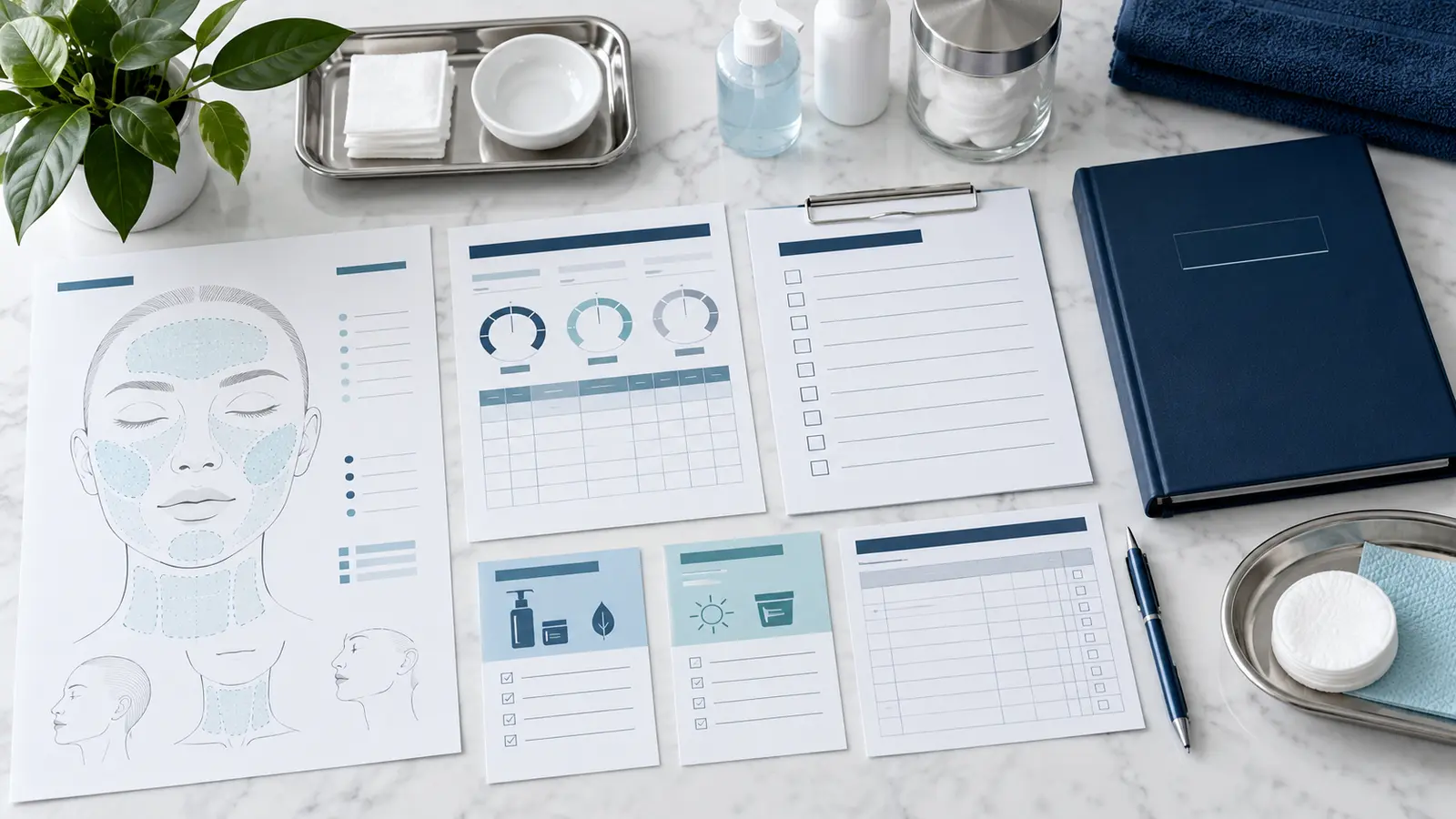
The complete microneedling document set
Clinical protocol
Purpose, scope, roles, screening, preparation, device workflow, documentation, aftercare, and escalation.
Orders or authorization
Any evaluation, prescription, standing order, supervision, or delegation documentation required for the state, device, products, and team.
Patient forms
Intake, procedure-specific consent, pre-care, aftercare, photography authorization where used, and follow-up guidance.
Operational records
Treatment record, room setup, cleaning, device maintenance, cartridge tracking, training, incident report, and version control.
Core protocol sections
Provider roles and authority
Identify who evaluates, orders, treats, supervises, provides topical medication authorization where used, and manages complications.
Patient screening
Organize history, medications, allergies, skin assessment, treatment goals, prior procedures, contraindications, precautions, and reasons to defer or refer.
Device and supplies
Name the device, software where relevant, approved cartridges and accessories, maintenance, single-use items, and manufacturer instructions.
Preparation and infection prevention
Connect hand hygiene, PPE, skin preparation, clean and contaminated zones, single-use components, sharps, environmental cleaning, and exposure response.
Approved clinical workflow
Describe treatment-area confirmation, device setup, parameter documentation, patient monitoring, endpoint assessment, and stop criteria without replacing device-specific training or judgment.
Aftercare and escalation
Define expected recovery, product guidance, activity and sun precautions, concerning symptoms, contact methods, follow-up, urgent referral, and reporting.
Microneedling treatment-record checklist
- Patient and date of service
- Evaluating and treating professionals
- Indication and treatment areas
- Consent and photography status
- Skin assessment and relevant screening
- Exact device and cartridge identifier
- Lot or serial tracking where applicable
- Parameters by treatment area
- Skin-preparation method
- Products applied before, during, or after
- Observed endpoint and patient response
- Aftercare, follow-up, and escalation
Document all substances used with or after the device. FDA notes that microneedling devices are not approved for delivering cosmetics, topical medications, vitamin solutions, drugs, or blood products into the skin; the clinic should carefully review intended use, evidence, product status, and applicable requirements.
RF microneedling needs a distinct pathway
Radiofrequency microneedling combines skin penetration with energy delivery and requires device-specific controls. In its October 2025 safety communication, FDA reported serious complications with certain uses, including burns, scarring, fat loss, disfigurement, and nerve damage. Clinics offering RF microneedling should separately address operator qualifications, parameter controls, treatment areas and depths, grounding or accessory requirements, skin response, stop criteria, complication recognition, and FDA reporting.
| Documentation area | Mechanical microneedling | RF microneedling |
|---|---|---|
| Device record | Model, cartridge, penetration settings, areas. | Model, tip, depth, energy and pulse parameters, areas. |
| Risk discussion | Infection, pigment change, irritation, scarring, unsatisfactory result. | Also address energy-related burns, tissue injury, fat loss, nerve injury, and device-specific risks. |
| Training | Device operation, asepsis, assessment, documentation. | Additional energy-device training, parameter selection, response recognition, and complication pathway. |
Review before implementation
Confirm the protocol matches the current FDA information, device labeling and instructions, state scope rules, clinician training, infection-prevention program, exposure-control plan, emergency resources, consent, treatment record, aftercare, and incident-reporting workflow. Final clinical approval remains with the clinic’s qualified medical director or supervising provider.
Selected authoritative resources
Frequently asked questions
Can one protocol cover standard and RF microneedling?
They may share some policies, but device, energy, risk, training, treatment-record, and complication requirements should remain clearly distinguished.
Should the template include exact depths and settings?
Clinical parameters should be device-, indication-, treatment-area-, and patient-specific, and approved by qualified clinical leadership using current instructions and training.
Can PRP or serums be added to the protocol?
Any product used with microneedling requires separate review of intended use, product status, evidence, infection risk, authorization, consent, and documentation. It should not be silently added to a generic protocol.
Who can perform microneedling?
That depends on the state, depth, device, energy, medications or products used, professional license, supervision, and other facts. Obtain state-specific clinical and legal review.
Build a clinic-specific microneedling package.
Coordinate the protocol, applicable orders, consent, intake, treatment record, SOPs, aftercare, checklists, and safety materials around your device and workflow.
Build My Protocol