Start with the exact device-not “laser” in general
Laser, intense pulsed light, and other light-based systems are not interchangeable. The protocol should identify manufacturer, model, technology, wavelengths, handpieces, cooling method, software, accessories, intended use, maintenance requirements, and current instructions.
Parameters require device-specific training, manufacturer information, qualified clinical approval, treatment-area assessment, skin and hair characteristics, and individual judgment.
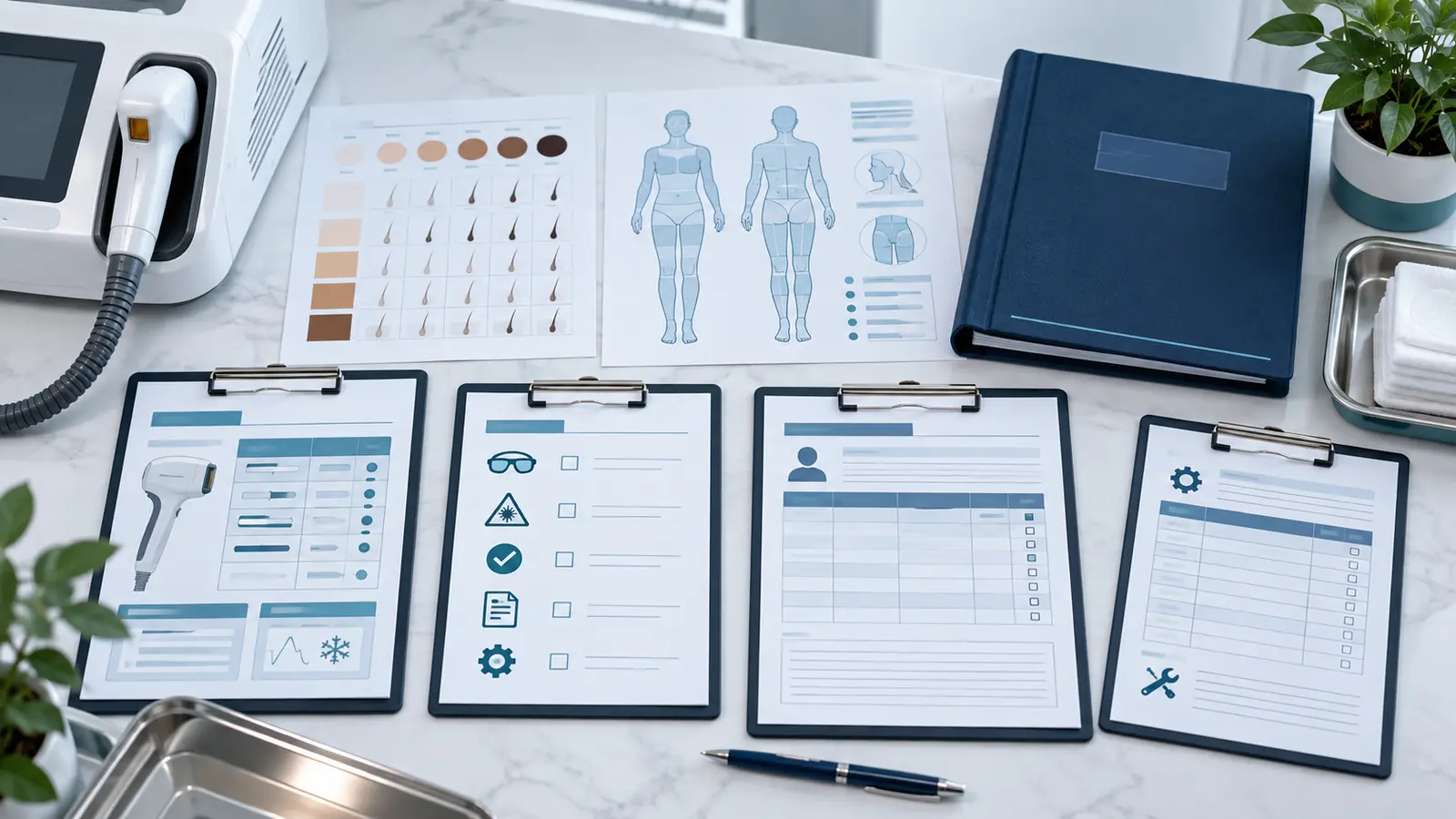
The complete document set
Clinical protocol
Roles, screening, preparation, device workflow, settings framework, documentation, aftercare, and escalation.
Patient forms
Intake, consent, pre-care, aftercare, photography choices, treatment plan, and follow-up.
Treatment and device records
Assessment, test spot, settings, areas, response, maintenance, calibration, service, and incident information.
Safety program
Laser safety responsibility, room controls, warning signs, eyewear, plume where applicable, fire safety, training, and emergency response.
Core clinical workflow
Verify operator authority and competency
Match the procedure, device, jurisdiction, license, supervision, training, and competency requirements.
Assess the patient and treatment area
Review history, medications, recent exposure or procedures, skin and hair characteristics, treatment goals, contraindications, precautions, and reasons to defer.
Prepare the room and device
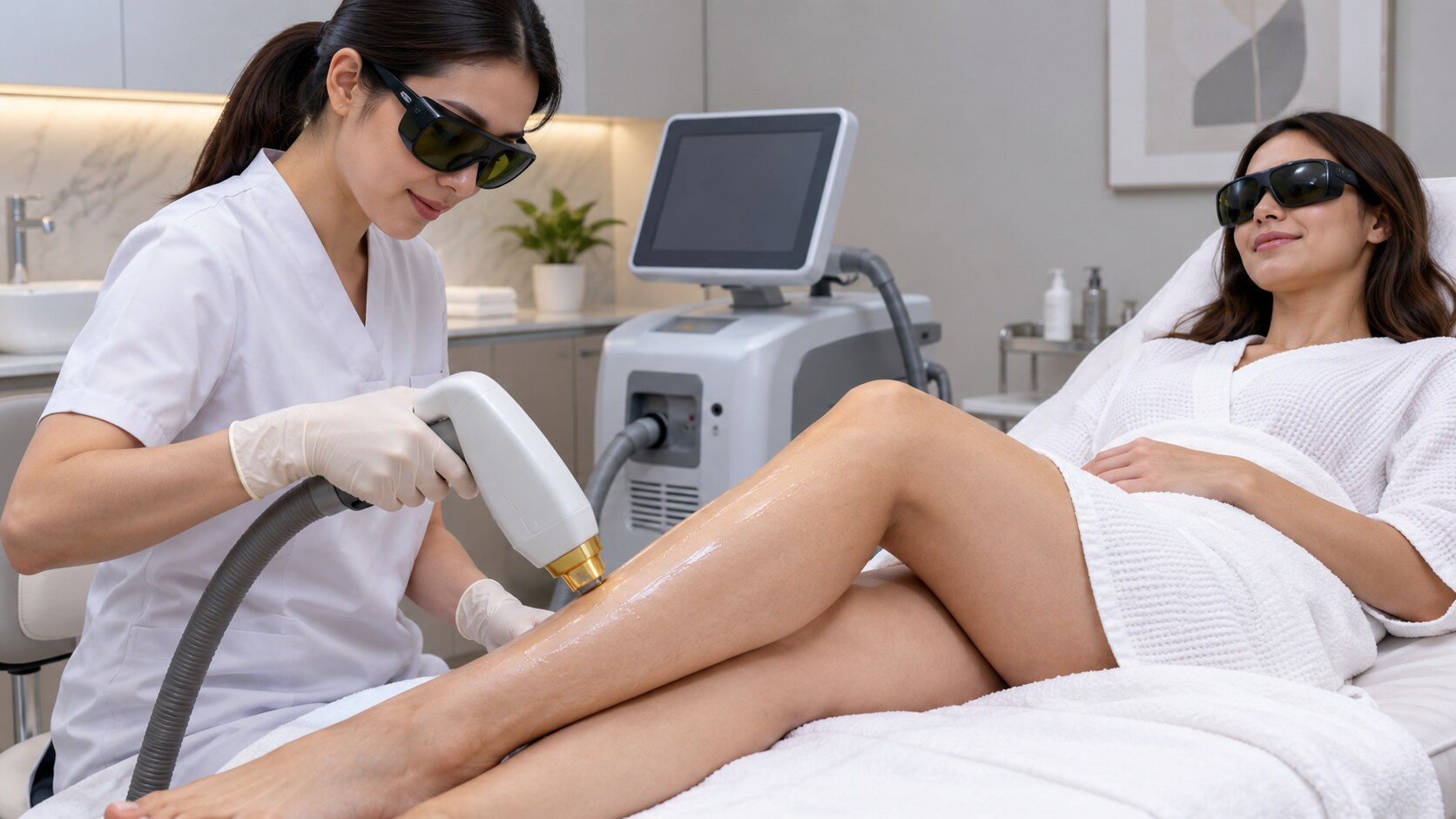
Confirm controlled access, warning signage, wavelength-appropriate eye protection, device checks, cooling, surfaces, flammable materials, and emergency readiness.
Document treatment and response
Record areas, device, handpiece, settings, test spot if used, skin response, cooling, patient tolerance, endpoint, and any variation or stop decision.
Provide aftercare and follow-up
Use clinic-approved instructions covering expected response, skin care, sun precautions, concerning symptoms, contact methods, and timing of the next assessment.
Treatment-record checklist
- Patient and operator identifiers
- Assessment and skin classification
- Hair and treatment-area findings
- Consent and photography status
- Device, handpiece, and wavelength
- Test spot and response where applicable
- Settings by area
- Cooling and protective measures
- Endpoint and patient response
- Aftercare and follow-up plan
Laser safety is more than protective eyewear
OSHA notes that laser exposure can injure eyes and skin. Protective eyewear must be appropriate for the specific wavelength and optical density. The clinic’s program should also address controlled access, signage, reflective surfaces, equipment keys, staff and patient protection, fire risk, electrical safety, plume when applicable, maintenance, incidents, and emergency response.
Review and maintenance
Compare the protocol with current device labeling, FDA clearance information, manufacturer instructions, state requirements, operator training, maintenance records, consent, treatment record, aftercare, and complication workflow. Assign scheduled and trigger-based review dates.
Selected authoritative resources
Frequently asked questions
Can one protocol cover laser and IPL?
A shared framework may be possible, but each device’s technology, wavelength, indications, settings, eye protection, training, and instructions must remain distinct.
Who can perform laser hair removal?
Requirements vary substantially by state and may address operator licensing, physician supervision, facility registration, and device-specific training.
Should settings be printed in the protocol?
Use a qualified, device-specific framework with controlled supporting references; avoid copying settings from unrelated devices or clinics.
Build a device-specific laser documentation package.
Coordinate your protocol, consent, intake, treatment record, SOPs, aftercare, safety checklists, and maintenance workflow.
Build My Protocol